U.S. Bank
Pivot, a U.S. Bank institutional B2B platform that scaled across eight business lines. It began with collateralized loan obligations (CLO), the foundation for everything that followed.
Financial Services
User Experience and Srategy
Design lead, consulting partner to U.S. Bank — I owned the design vision and research approach across eight business lines, leading a team of three to six designers and researchers. The product owner held the roadmap, and the research shaped it.
It was a successful eight-year relationship: $1.9B in annual Pivot revenue by 2021, 27% to 62% market share in five years, retired 15 legacy applications.
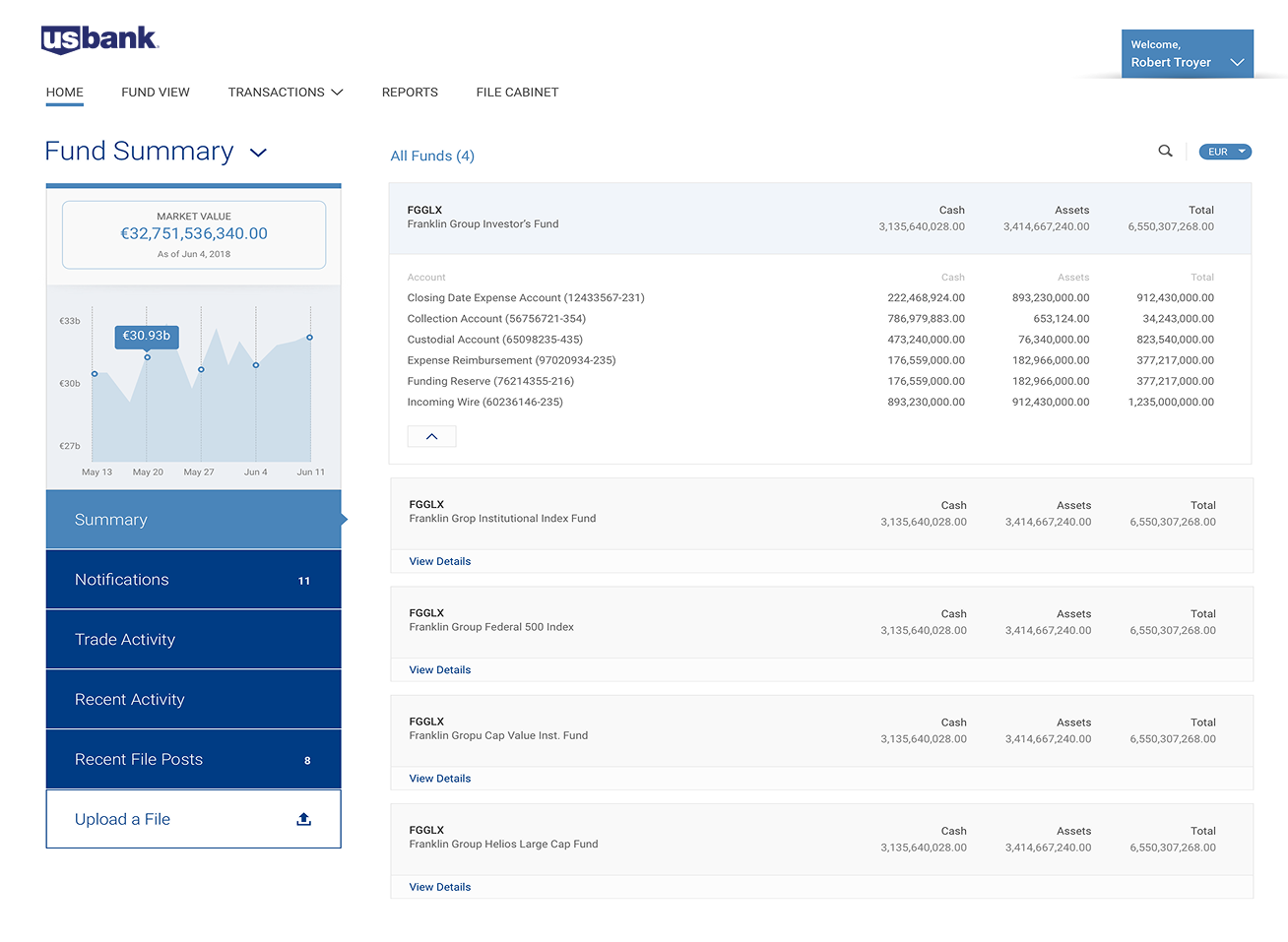
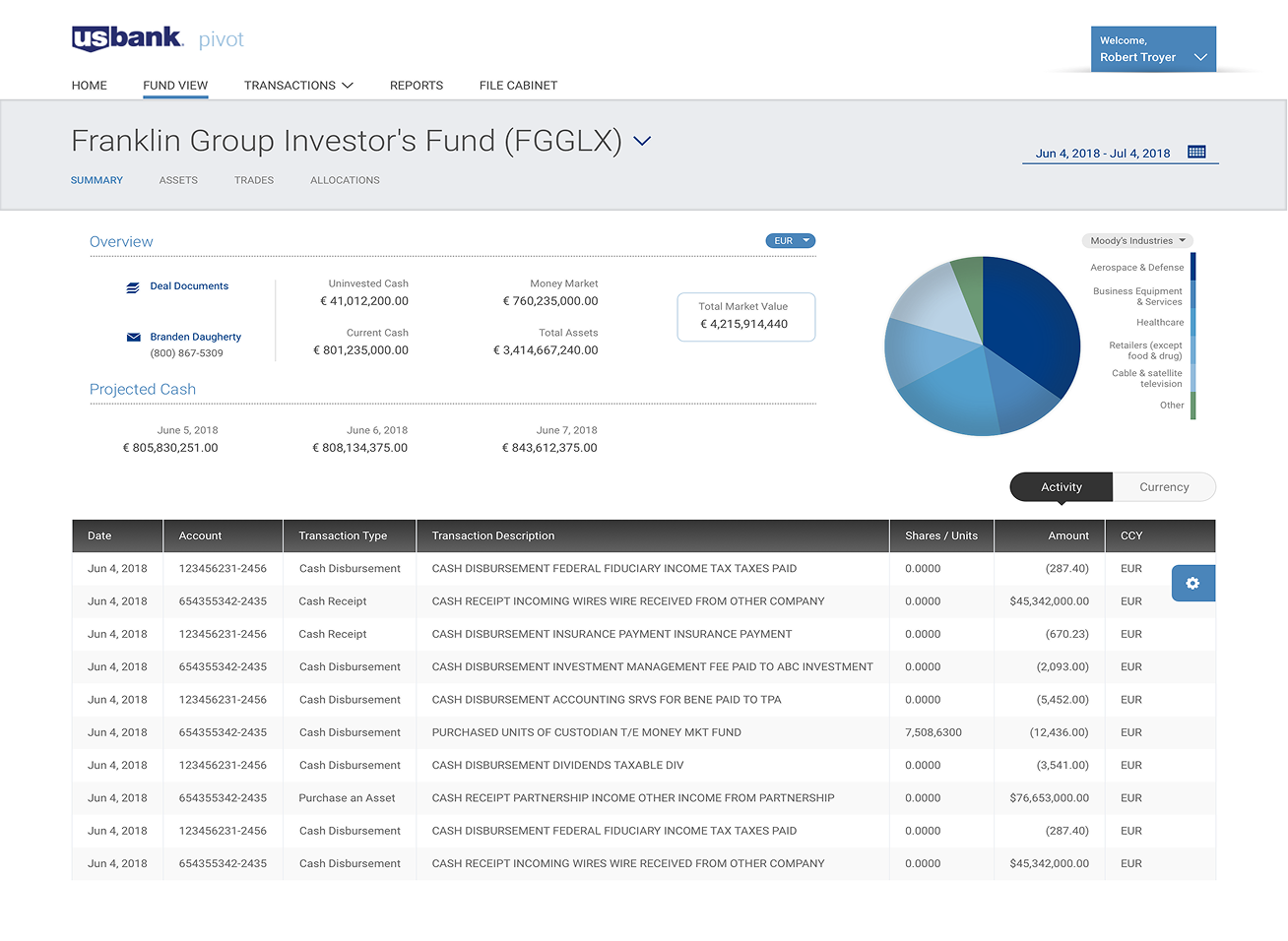
User research was a key factor in our initial success. We cast a wide net, covering all eight business lines, to understand the full landscape.
The client had a strong idea of what we needed to solve for, but what we found in user research was different. What they saw was a symptom, not the cause. The real issue was a transparency problem. We also saw that B2B apps lacked sophistication. I knew we needed to change that.
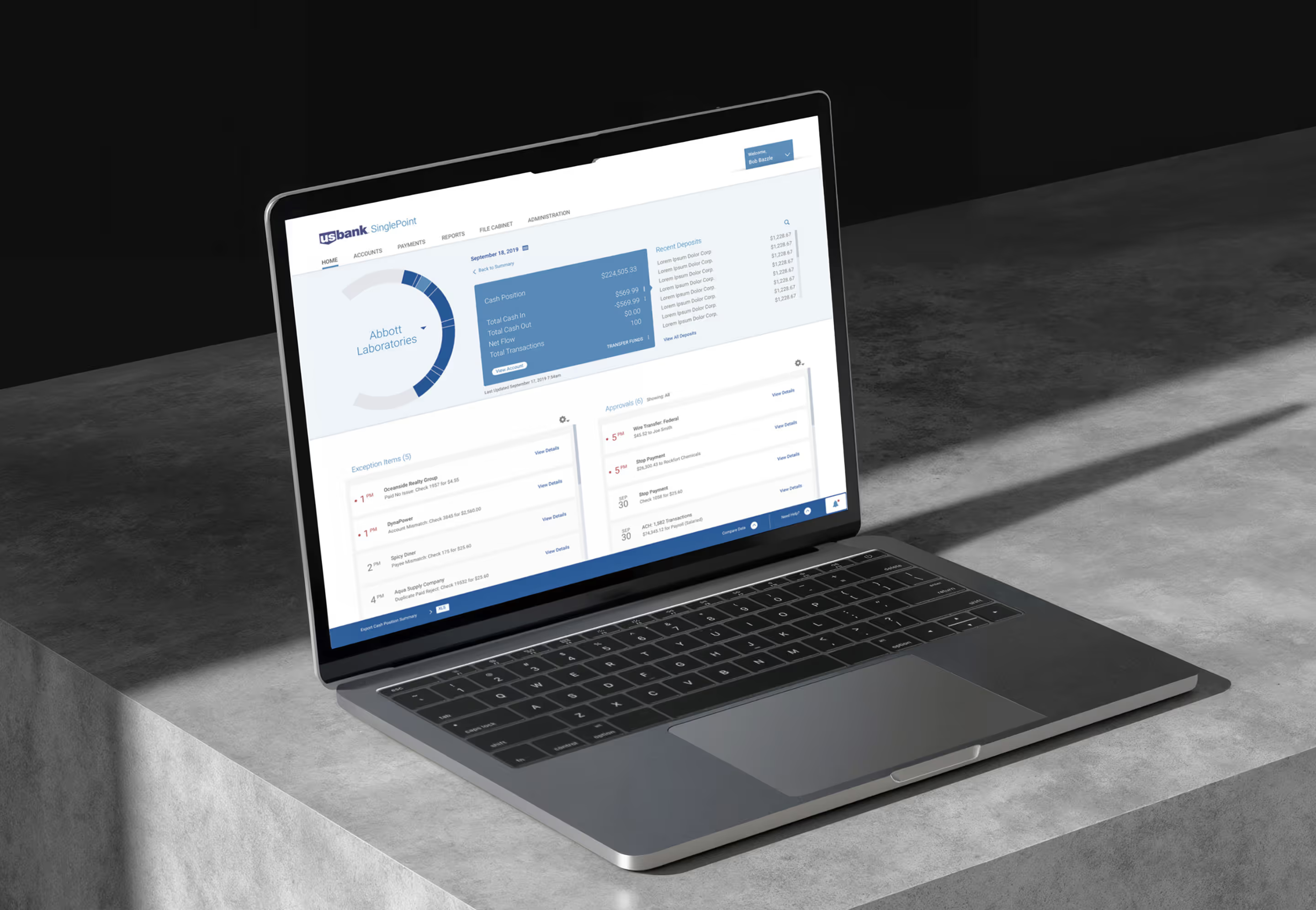
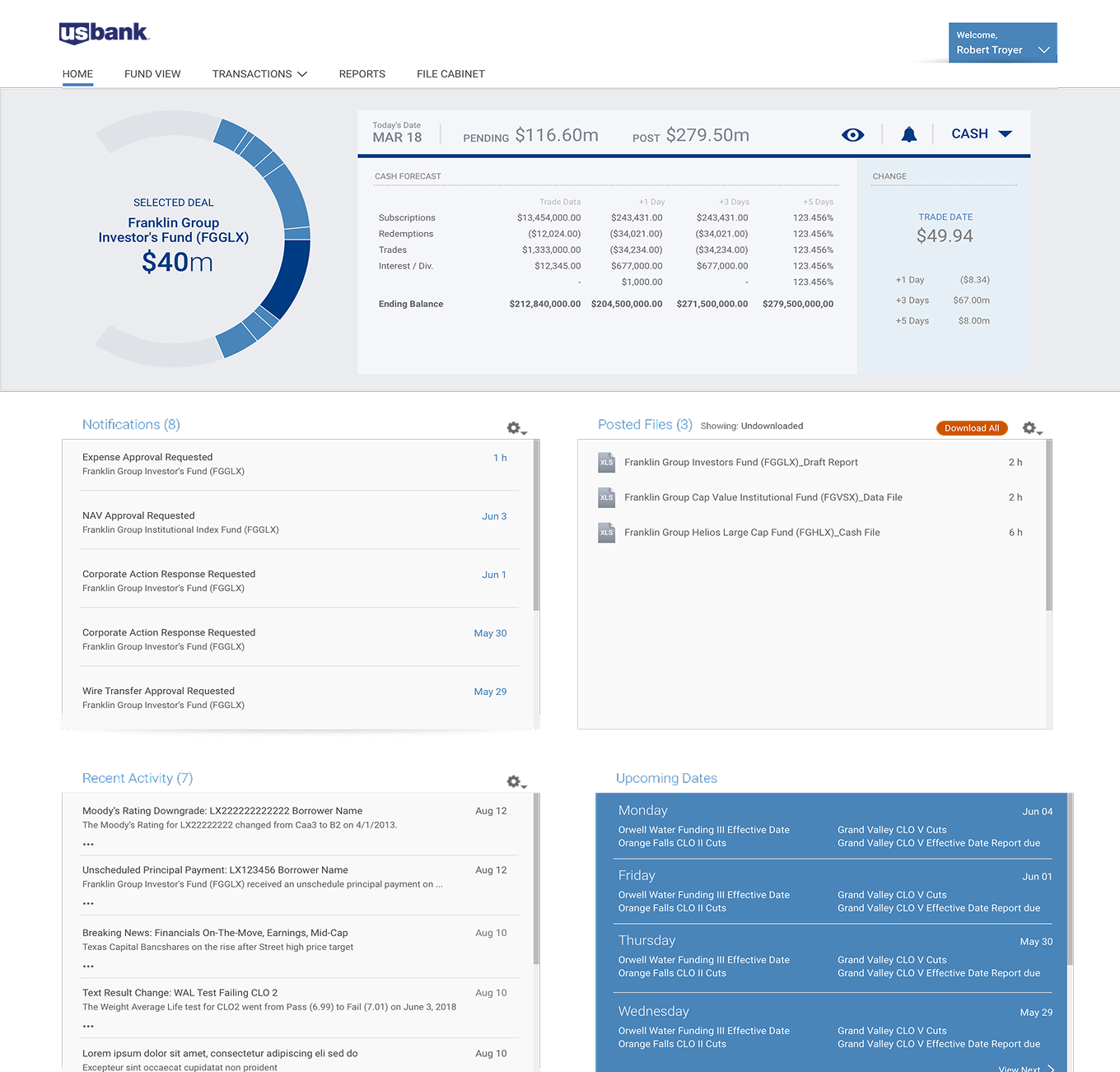
We added sophistication by making eye-catching elements functional. This “wheel” is a symbol that allows users to click between accounts. It became a proprietary asset that truly resonated with both internal and external clients.
Use of color
The visual designer's color choices also resonated. Leading with a neutral palette and using a family of blues to communicate functionality resulted in a product that looked as considered as it was. That mattered when it was time to put it in front of clients.
The client used our prototypes during their sales pitches, and customers were buying. Market share grew from 27% at the start of the project to 45% by launch.
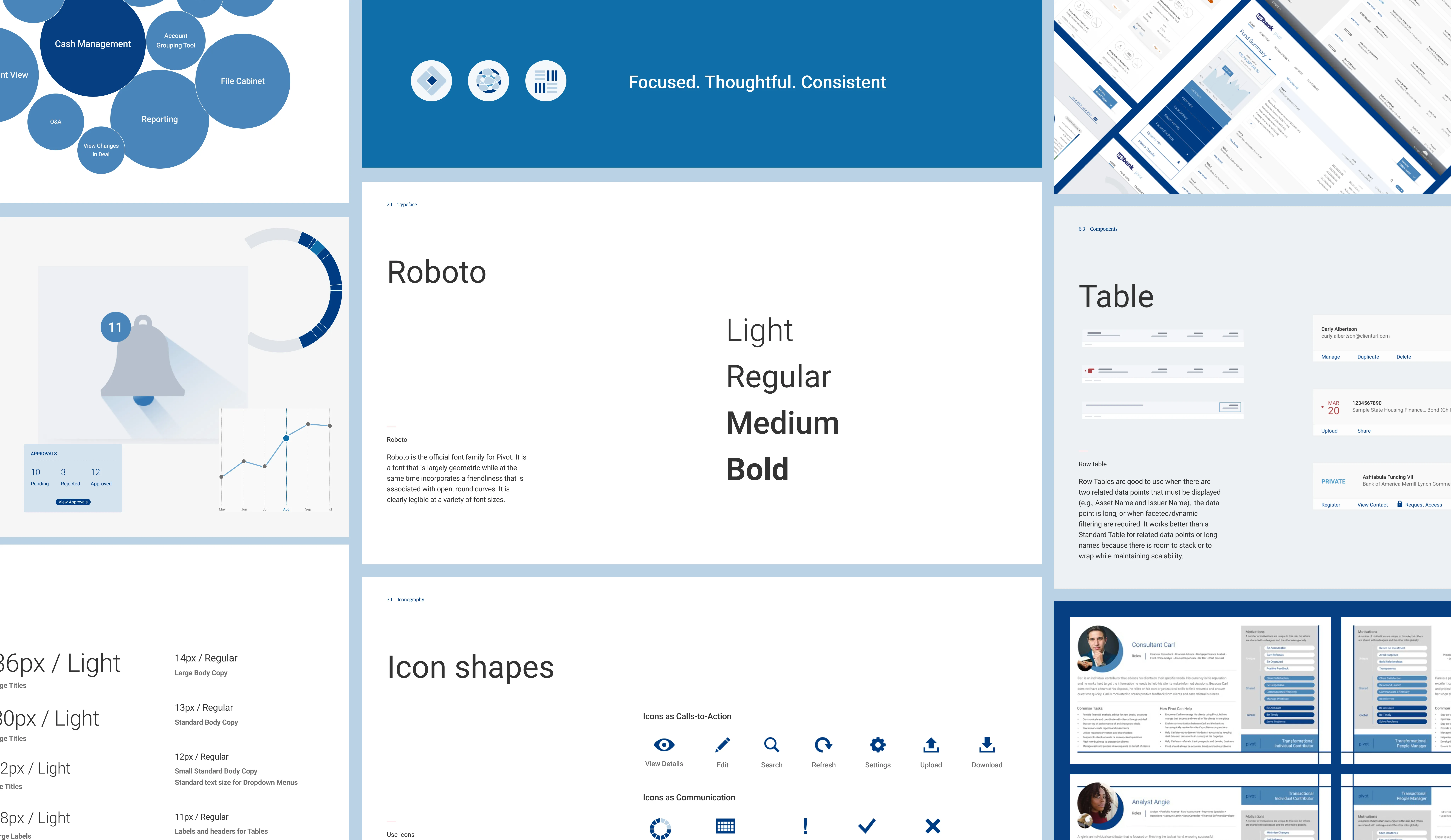
Once we launched the first business line, CLO, it was time to expand. Because the other business lines had been part of the initial research, we moved quickly, and the Pivot design system was born. We were thoughtful and disciplined about every change to the system, and research guided each one. We also kept listening, conducting more than 350 contextual inquiries with U.S. Bank customers and employees over the years.
27%
62%
“It wasn’t just that the product was successful, but it really transformed our brand’s perception and the market, positioning us as a tech innovator.”
— Bob Troyer
Many people wove themselves into Pivot over the eight years I was part of the project. Designers, researchers, engineers, and partners at U.S. Bank came and went, and the work grew stronger with each of them. The foundation still holds today. Pivot serves more than 4,700 institutional clients and oversees more than $1 trillion in assets. Projects like this are rare. This one holds a special place in my heart.