J.P. Morgan
The Global Treasury team wanted to explore the future of cash. I drew on my past experience as their consultant to help shape that vision.
Financial Services
Product Strategy
Design Thinking
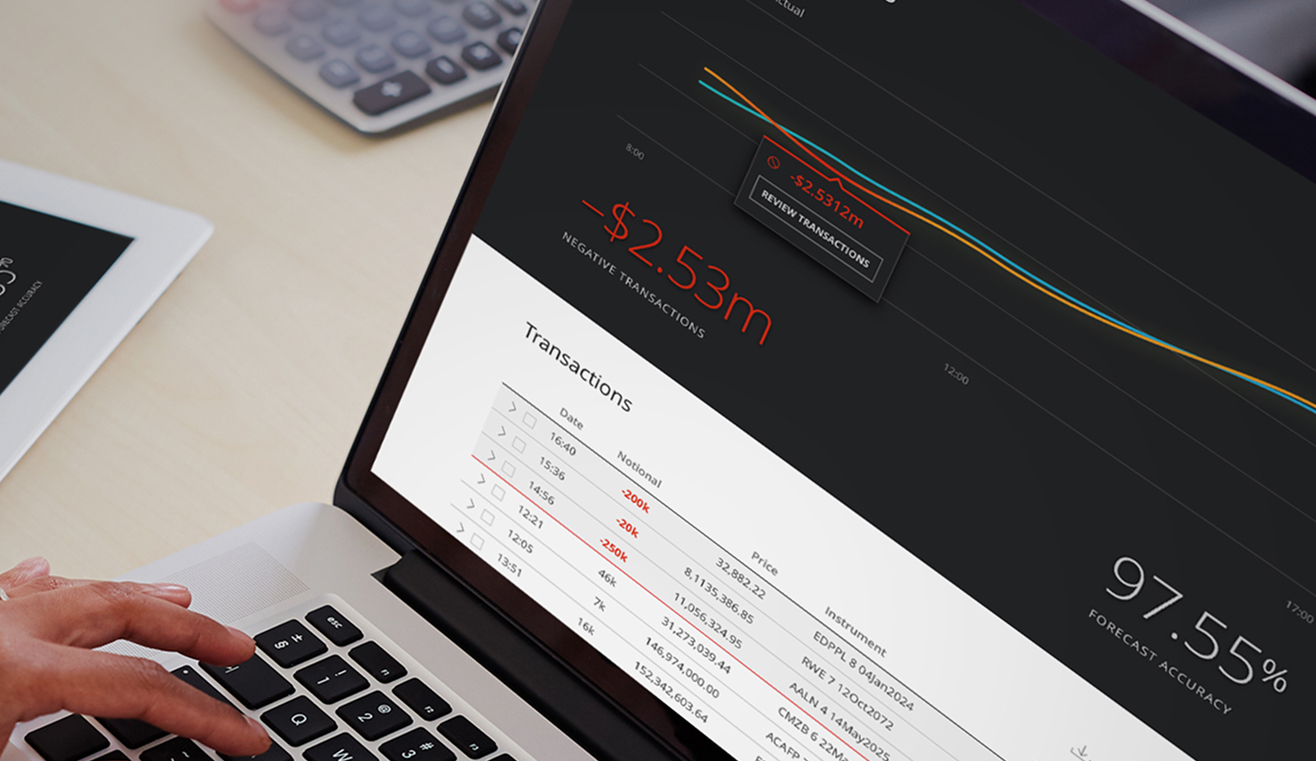
My first engagement with the treasury team was in 2008, when I designed the client dashboard and reporting functions for a new B2B web application.
Many of the ideas I brought forward about design approach and features weren't a priority at that time. A decade later, they were ready to explore what their long-term vision should be. Our team used their new design system to create concept designs showing how these new workflows could come to life, and I used those concepts as inputs for a design-thinking workshop. Below are some of the ideas.
Forward-thinking ideas
Automated issue resolution
Identify missing credits, locate contacts, reach out, and document correspondence in one streamlined process.

Maximize earning potential
Monitor balances, intelligently match funds to the highest-yield accounts, and proactively guide managers toward smarter, more profitable decisions.

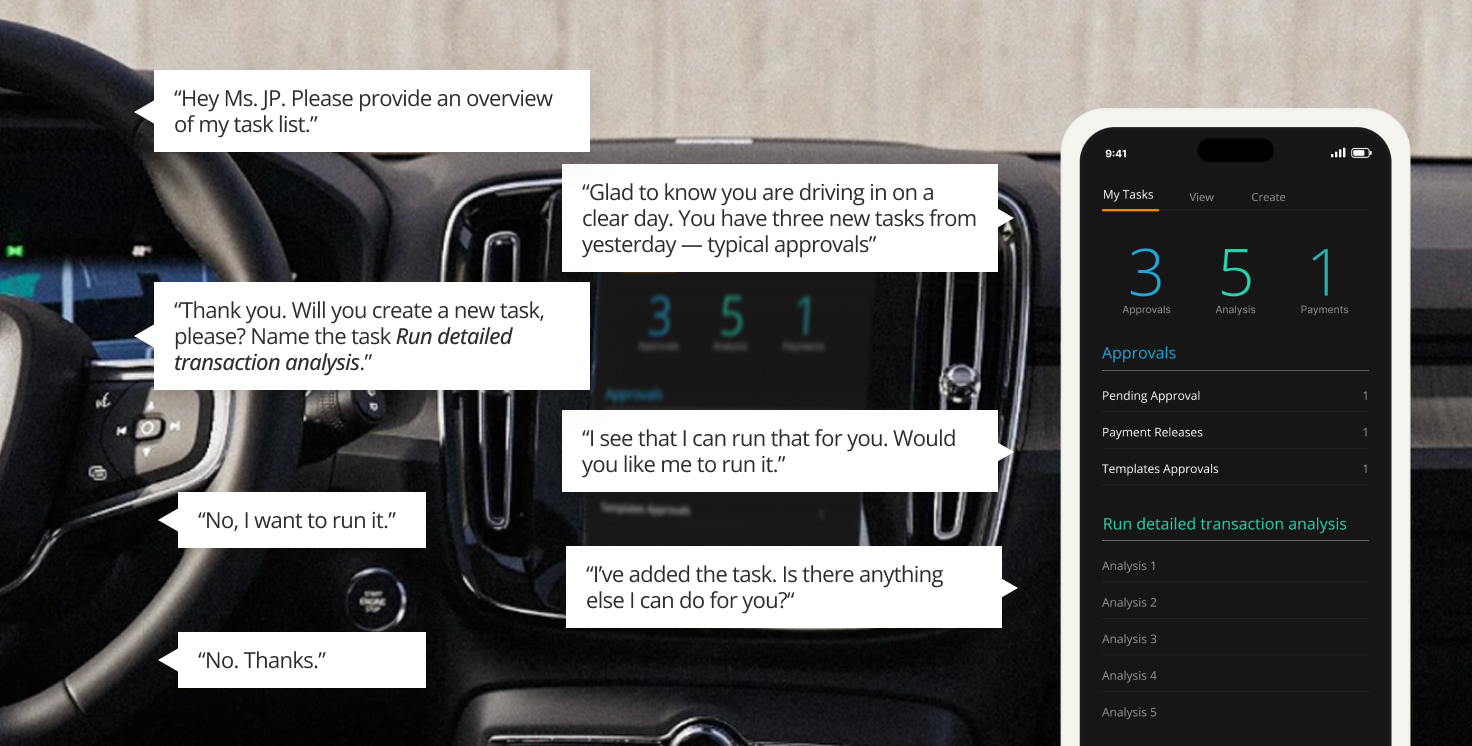
Voice interaction
Coordinate tasks outside the traditional interface with voice and natural language processing, boosting productivity and accessibility.
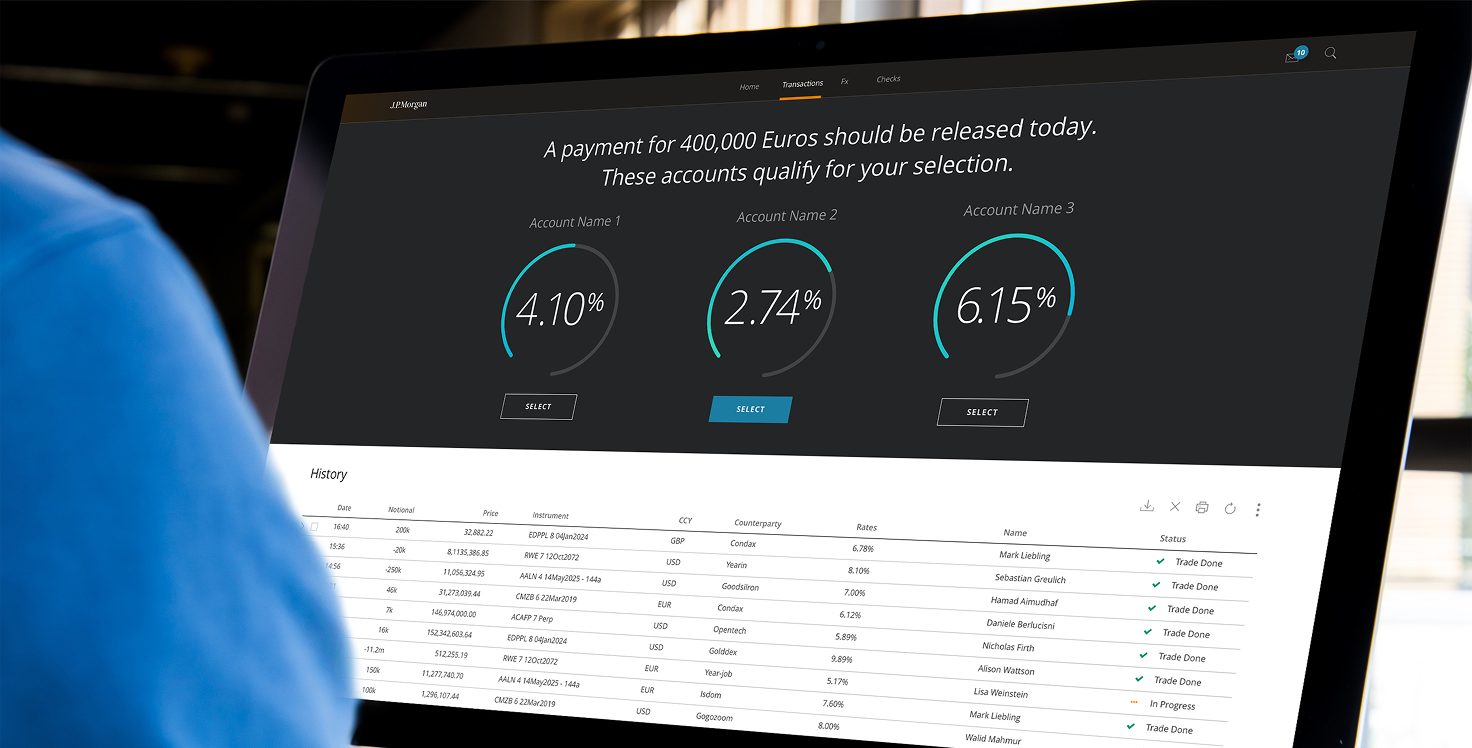
Proactive notifications
Notify users of upcoming payments and display qualifying accounts automatically, replacing multiple manual authorization steps.
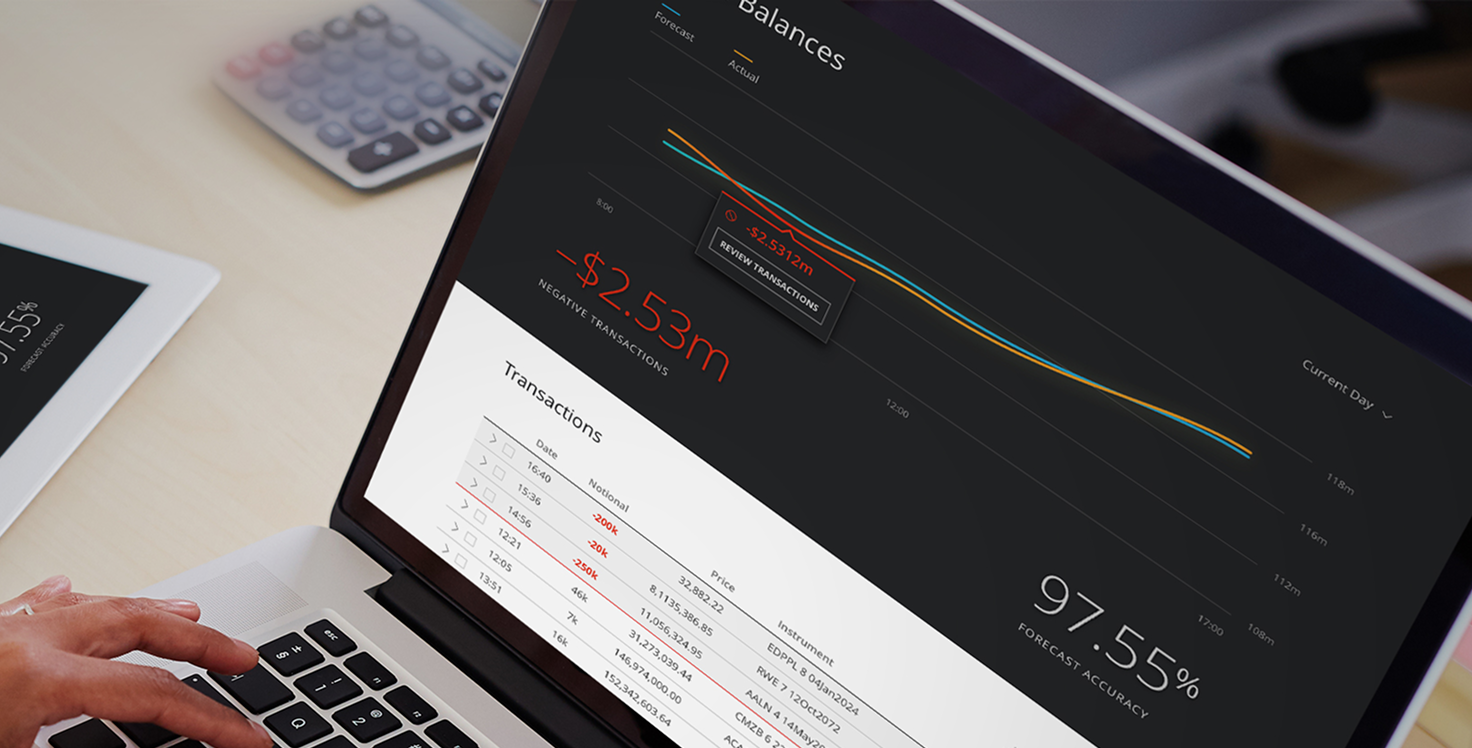
Accurate forecasting
Identify the transactions responsible for variance to reconcile faster and forecast with confidence.
Shaping ideas
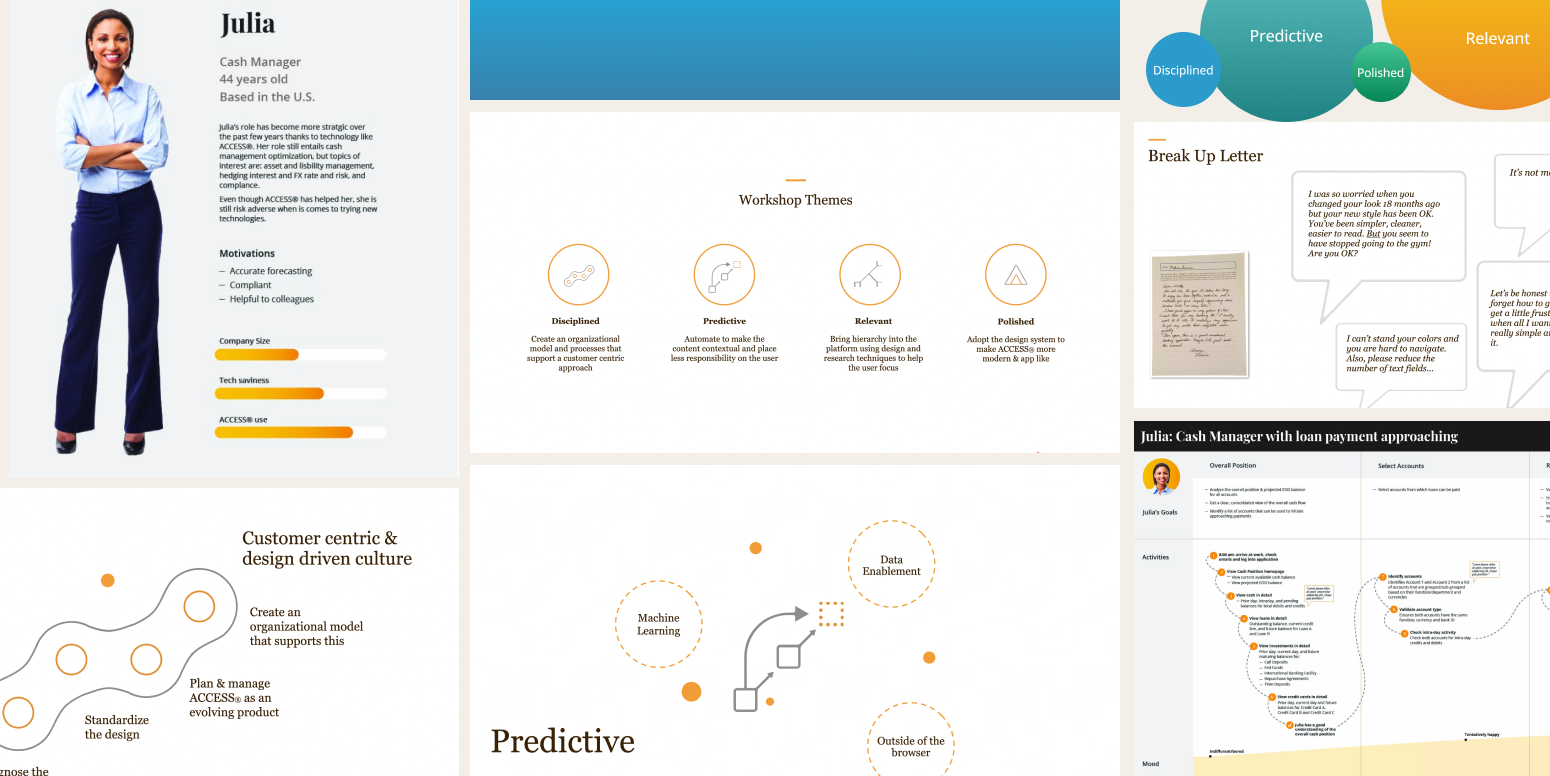
These scenarios were solutions to problems I'd observed years earlier, now supported by technologies mature enough to make them real.
Even so, in 2018, adopting AI-driven optimization, voice interfaces, and predictive analytics felt like a large undertaking. Today, much of it is expected in enterprise software. Whatever path they chose, they had a clear picture of what was coming.